

Personal Safety and Panic Button System for Business by Fisher Systems
Fisher Systems brings decades of security and life safety experience to facilities that need dependable emergency communication. Our design work connects panic alerts with the monitoring, access control, video, and life safety infrastructure already shaping how a site is protected. For businesses, a panic button gives staff a discreet way to call for help while giving decision-makers a clearer path for verifying the incident and directing the next step.
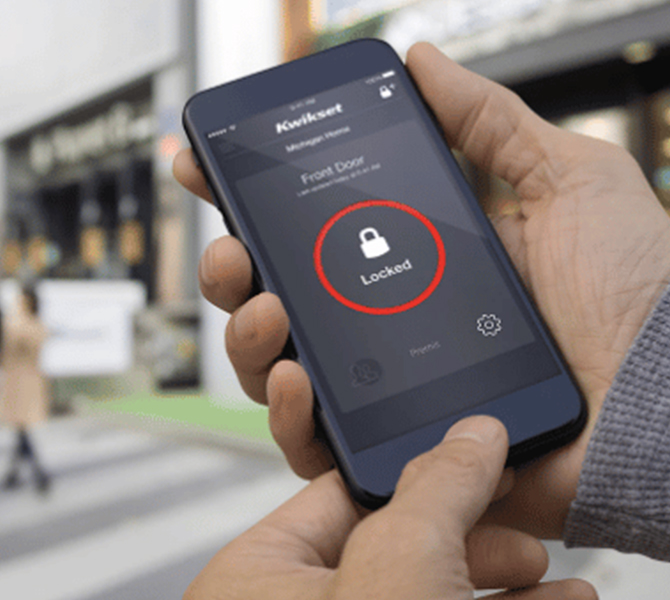
Commercial Emergency Alert Systems
The first moments of an emergency are often unclear. Staff may know something is wrong before managers, security personnel, or responders have enough context to act. A commercial emergency alert system should shorten that gap by making activation simple, routing the signal clearly, and reducing confusion when timing matters.
-
Instant Emergency Alerts
Fisher Systems designs panic alert tools that support faster incident visibility across commercial environments. When an employee activates an emergency alert, managers or responders may need immediate context about where the signal came from, what area is affected, and whether additional verification is required. Instant emergency alerts help reduce that uncertainty during the first moments of an incident.
-
Discreet Activation
Visible escalation can increase risk in certain situations. A discreet panic button creates a quieter path for requesting help, which is especially useful for reception staff, retail employees, healthcare workers, school offices, and other roles that regularly interact with visitors or the public.
-
Fast Security Response
A fast response depends on more than immediate notification. Each alert needs a defined path, so the right people know whether to check video, contact on-site staff, secure an area, or escalate the incident further. Clear routing helps the signal reach the right contact faster, ensuring response protocols begin without delay or confusion.
Panic Button Systems for Employee Protection
Employee protection depends on whether staff can use the system quickly and confidently under pressure. Panic buttons need to be placed where risk is likely to occur, but they also need to feel intuitive in the moment. A strong design accounts for employee movement, visibility, discretion, and the realities of how people react during stressful situations.
-
Staff Safety and Emergency Coverage
In many workplaces, the person closest to a threat is also the person with the least time to explain it. Reception staff, front-counter employees, and administrative teams may be separated from managers or security personnel when a situation begins. Panic alerts help close that distance by bringing others into the incident before the employee is left handling it alone.
-
Flexible System Design
Building conditions often shape what kind of device makes sense. Fixed buttons can work well at cashier stations, reception desks, administrative offices, or other defined work areas. Wireless panic devices may be better for finished buildings, leased spaces, changing layouts, or locations where new wiring would create disruption.
-
Panic Button System Integration
A panic button becomes more useful when it contributes to incident visibility. Connected alarms, monitoring, access control, or video can show where the alert came from, whether nearby doors are secured, or which camera view should be checked first.
Wireless Panic and Silent Alarm Systems
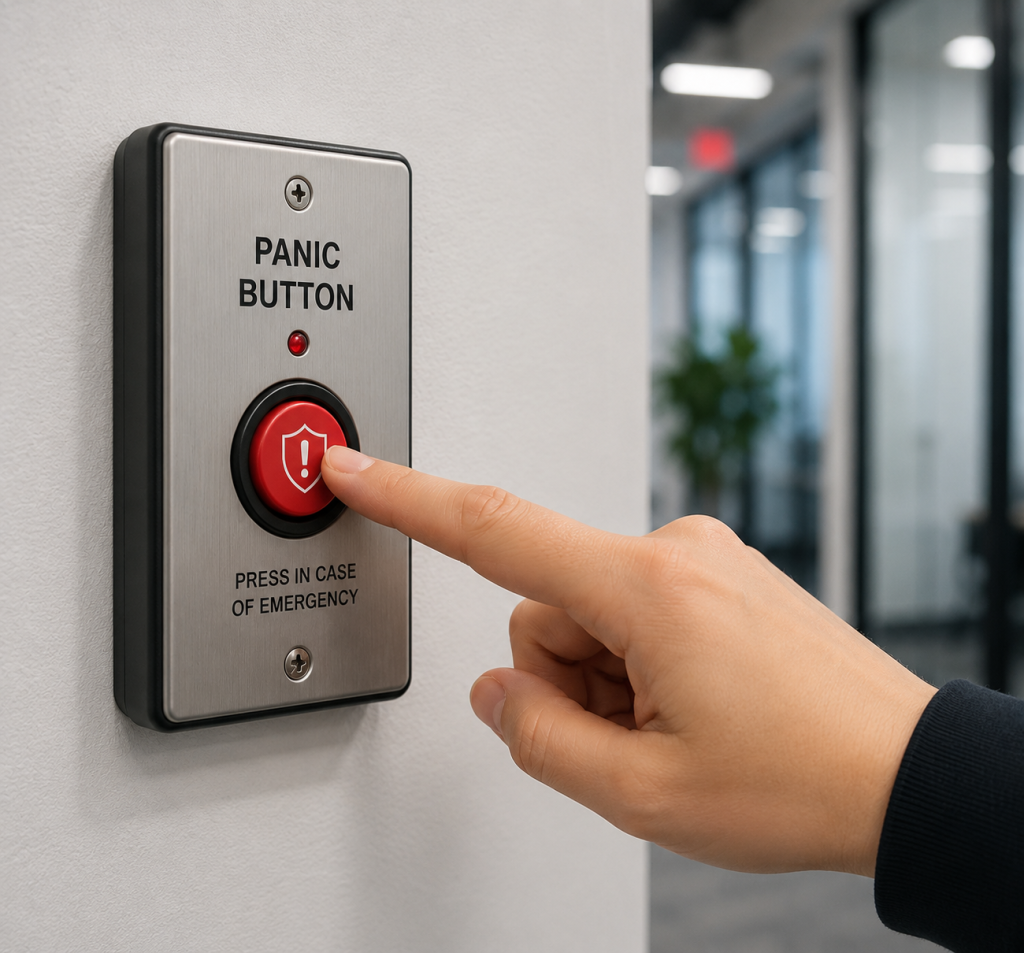
Some facilities need emergency alert coverage in places where visible hardware, new wiring, or obvious activation could create problems. Wireless and silent alarm options give businesses more flexibility in how alerts are placed, triggered, and communicated, especially in areas where discretion or retrofit-friendly installation matters.
-
Wireless Emergency Alerts
Wireless devices are often useful when emergency coverage needs to be added without opening walls, disrupting finished spaces, or committing to a fixed layout too early. They can also support front desks, temporary work areas, and changing floor plans where staff locations may shift over time.
-
Silent Alarm Activation
A silent panic alarm system communicates the emergency without broadcasting it to everyone nearby. During aggression, threatening behaviour, or an attempted robbery, a quiet alert path lets staff request assistance without creating a visible confrontation.
-
Stable Signal Transmission
Speed means little if the signal does not reach the right destination. Fisher Systems plans panic alarm installation around device placement, building layout, communication reliability, and the contacts assigned to each activation point. Staff should be able to trust the alert pathway under real conditions, not only during routine testing.
Why Clients Trust Fisher Systems for Duress Alarm System Installation
Fisher Systems plans duress alarm installations with the surrounding security environment in mind. A panic button may need to interact with monitoring, video review, access control, or life safety procedures, depending on the facility. Our broader planning perspective helps us design systems that fit the way emergencies are identified and managed.
-
Professional Panic Alarm Installation
Installation affects whether the button can actually be used when it matters. Devices need to be reachable without being obvious, placed where staff can activate them naturally, and connected to the correct notification path. Poor placement can make even a well-planned system harder to use under pressure.
-
Customized Safety Solutions
A school office may need a discreet alert path for administrative staff, while a commercial facility may need defined activation points near reception, management offices, and public counters. The stronger design question is not simply where a button can fit, but what the button needs to communicate and who needs that information first.
-
Trusted Security Experience
Fisher Systems’ experience across commercial security and life safety gives clients a practical advantage when planning emergency alert tools. Panic buttons are not evaluated in isolation. We consider how alerts affect monitoring, video review, access control decisions, staff procedures, and the information decision-makers need during an incident.
Safeguard Your Workplace With a Business Emergency Alert Button From Fisher Systems
A well-designed panic alert system can improve how emergencies are identified, communicated, verified, and managed across the facility. From discreet activation points to integrated monitoring and response coordination, emergency alert coverage needs to reflect how the site operates and how staff may need to react under pressure.
Fisher Systems plans panic button and duress alarm coverage as part of a broader security and life safety strategy, helping businesses create clearer communication pathways during high-stress situations. Our team can review your layout, response needs, and existing security infrastructure to determine where emergency alert coverage should be placed and how notifications should be routed. Call us toll-free at 1 (800) 755-1477, or contact us online to get started.